
Iran’s Courageous Women: Leading the Change Amidst Unyielding Resistance
A note before we begin: this isn’t a story about politics or geopolitics, and it’s not me taking sides in any conflict. This is a story about the human spirit — about resilience, courage, and what it means to find purpose in the face of adversity. I hope you’ll read it in that spirit.
Introduction
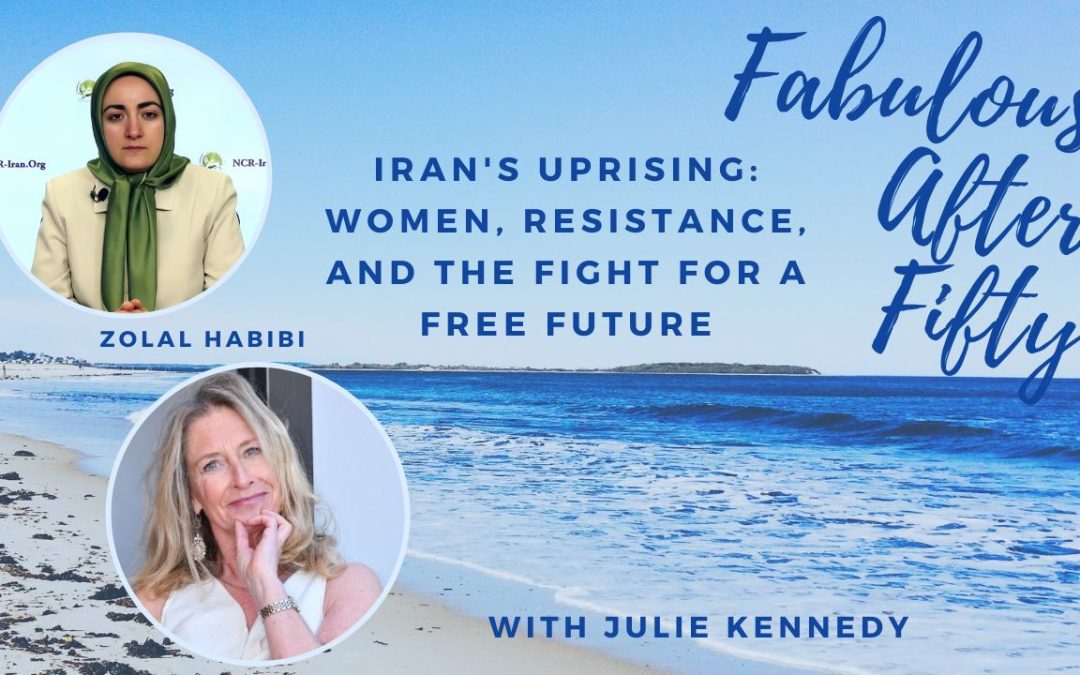
In the face of adversity, the strength of the human spirit is tested. This is especially true for the women of Iran who are standing at the forefront of the fight for justice, democracy, and gender equality. Today, we share insights from a poignant conversation with Zolal Habibi, an Iranian human rights activist whose life’s journey embodies the resilience and power of women in transforming their society.
A Voice of Change: Zolal Habibi
Zolal Habibi is more than an activist; she’s a storyteller, weaving the history of Iranian resistance with her own personal narrative. Engaged in activism from a young age, Zolal’s life has been shaped by her parents, who were student activists opposing the oppressive rule during the Shah’s regime. The profound influence of her family’s history of resistance inspired Zolal’s lifelong commitment to human rights.
Transformative Role of Women in Resistance
Despite harsh repression, women in Iran have continually defied the status quo. Since 1980, compulsory veiling laws met with protest led by women — symbolizing not just resistance to dress codes, but to the broader suppression of freedoms. Embracing both modernity and tradition, Iranian women are leading their movement under the uplifting slogan, “With or without the hijab, our direction is revolution.”
Women in the Iranian resistance have broken through barriers, confronting gender biases even within their own movement, recognizing that their struggle for equality is intertwined with the fight against tyranny.
The Personal Costs of Activism
Zolal’s story is a testament to personal sacrifice. After the brutal execution of her father by the regime, her family’s plight didn’t end. Like many, they faced continued threats and had to make heart-wrenching decisions, such as Zolal’s mother sending her children abroad to ensure their safety while continuing the fight.
Yet these sacrifices only solidified Zolal’s resolve. Her mother became a symbol of strength, making difficult choices for the greater good — an example Zolal followed, inspired by the experiences of countless women who endured torture and remained steadfast in their resistance.
Lessons in Resilience and Empowerment
The experiences of Iranian women have inspired movements far beyond their borders. The ascent of women into leadership roles within the Iranian resistance showcases transformative internal change. By 1989, every secretary general in the movement, and over half of the National Council of Resistance, were women. This empowerment didn’t just alter organizational dynamics — it sent ripples through society, marked by moments like the student uprisings and ongoing protests.
The story of these women goes beyond fighting for their rights. It holds universal lessons of leadership, courage, and tenacity — encouraging all of us to drive change in our own communities, whatever adversity we face.
Zolal’s Message: Be the Change
Zolal encourages us all to reflect on our responsibility to enact change, irrespective of scale. She advocates for taking initiative rather than waiting for someone else to lead where there is injustice or need. The power of even small actions, she reminds us, can ignite broader transformation.
She shares a poignant example of a young activist’s initiative to raise awareness against the death penalty — proof that age and distance need not be barriers to making an impact.
Conclusion: Inspiring Change Through Action
Sharing Zolal Habibi’s story is a call to action for each of us to be “the change we wish to see in the world.” She reminds us that meaningful change begins with understanding our own capability to act, and never underestimating our potential to transform the communities and societies around us.
By living purposefully and courageously tackling the issues in front of us, we contribute to a world where justice, freedom, and equality are not just aspirations, but realities. Let us draw inspiration — not from any political position, but from the simple, human courage of Zolal and the women of Iran — and use our time on earth to make a lasting difference for others.